Skip to content
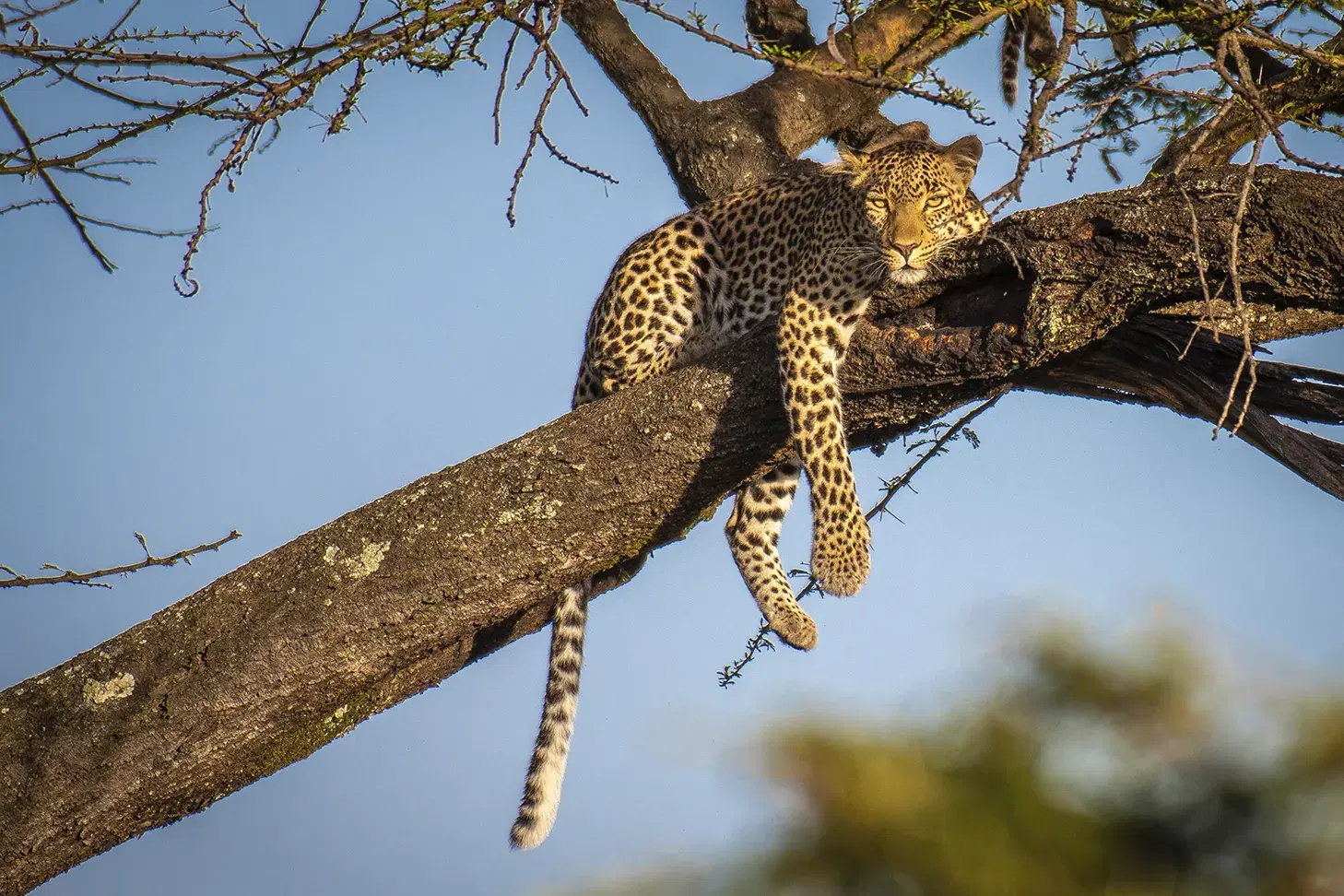
Leopard resting on an acacia branch in the Masai Mara

Guide

What Africa's Big Five are — lion, leopard, elephant, rhino and buffalo — where the name came from and which parks in Kenya and Tanzania to see each one in.

The Big Five are the lion, the leopard, the elephant, the rhino and the Cape buffalo. The name was not coined by naturalists but by big-game hunters in the early twentieth century: these were the five most dangerous species to hunt on foot. Today the term survives as a sighting reference, and all five can be seen on a single trip by combining parks.

The Big Five is not a list of the five largest animals in Africa. If it were, it would include the giraffe and the hippo, and leave out the leopard, which weighs less than either.

The term was coined by big-game hunters for the five species that were most dangerous to bring down on foot: the ones that charge, rush or stand their ground instead of running. It is a classification of risk, not of size, and that origin explains why the list looks arbitrary until you know where it came from.

The photographic safari industry inherited the term and changed its meaning. Today it works as a sighting checklist, and as a decent indicator of a park's health: where all five are present, the ecosystem is reasonably intact.

Lion

The only truly social cat on the continent: it lives in prides with a stable structure. It is the easiest of the five to find, and also the one that spends the most time asleep — up to twenty hours a day. Seeing one hunt means heading out early or staying until dusk, which is when the pride comes to life.

Leopard

The hardest. It is solitary, largely nocturnal, and its camouflage is designed precisely so that you do not see it. Its most useful habit, from the watcher's point of view, is hauling its kill up a tree to keep it from the hyenas: an experienced guide does not look for the leopard, he looks for the kill hanging from a branch.

African elephant

The largest land mammal alive. It lives in family groups led by an old female, the matriarch, who is the memory of the group: she knows where the water was in a drought that happened decades ago. It is an animal whose distance you respect, above all when there are calves.

Cape buffalo

The most underestimated and the most dangerous of the five. In a herd it is calm; the problem is the old males pushed out of the group, who travel alone, have a foul temper and charge without warning. Guides pick them out from a long way off and give them room, and they are right to.

Rhino

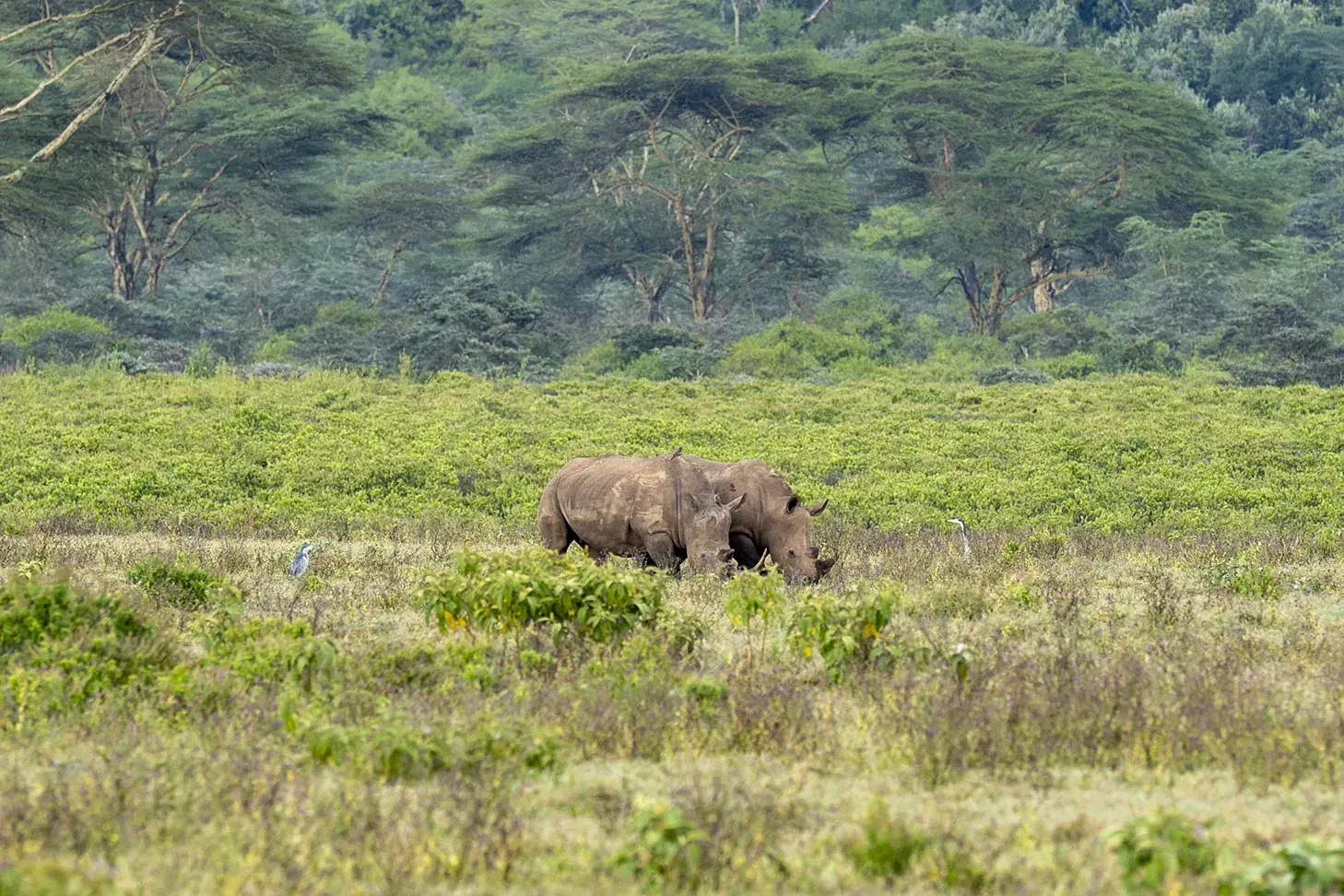
The most threatened. There are two species, and the difference is not the colour — both are grey — but the mouth: broad and square in the white rhino, built for grazing; pointed and prehensile in the black rhino, built for browsing shrubs. The black rhino is critically endangered, and seeing one in the wild is, today, a genuine privilege.

No park guarantees all five, which is why serious itineraries combine several. This is the logic we use when putting a route together in Kenya:

Parks and how likely the sightings are
Park or reserveStrong forNote
Masai MaraLion, leopard, elephant, buffaloThe open plain makes encounters frequent and easy to see.
Lake NakuruRhinoA fenced park with a rhino sanctuary, plus lions and leopards.
Ol PejetaRhino, all fiveA conservancy with a black rhino sanctuary and all five species present.
SamburuElephant, lion, leopardIts own semi-arid wildlife: reticulated giraffe, Grevy's zebra and beisa oryx.
Ngorongoro (Tanzania)All five in a single dayThe crater holds resident wildlife all year round in an enclosed space.

At Ol Pejeta Conservancy, in the Mount Kenya region, live the last two northern white rhinos left on the planet. They are two females, mother and daughter. When they die, the subspecies is gone.

Ol Pejeta is part of the itinerary of our northern Kenya programme. We did not include it for that reason, but because it is one of the best rhino stops in the country. Even so, it is worth knowing what you are looking at while you are there.

Seeing all five does not justify anything and everything. There are practices you come across in the field that are simply wrong: surrounding a cat with vehicles, cutting off a moving herd, leaving the track to get closer, using sounds to provoke a reaction.

A good guide keeps his distance, switches off the engine and waits. He ends up seeing more, because the animal carries on with what it was doing instead of leaving. In practice that judgement is the single biggest difference between one safari and another, and it appears in no brochure.

The specific doubts we get most often on this subject, answered plainly.

Can you see the whole Big Five on a single trip?

Yes, by combining parks. In Kenya the usual route pairs the Masai Mara for lion, leopard, elephant and buffalo with Lake Nakuru or Ol Pejeta for the rhino. In Tanzania, the Ngorongoro Crater holds all five species within a single day. What does not exist is a guarantee: these are wild animals.

Which of the Big Five is the hardest to see?

The leopard, by a distance. It is solitary, hunts at night and its coat is built to disappear between light and shadow. After that comes the rhino, not because it is elusive but because so few remain and it is only found in specific parks and conservancies.

Why is the buffalo in the Big Five and the giraffe is not?

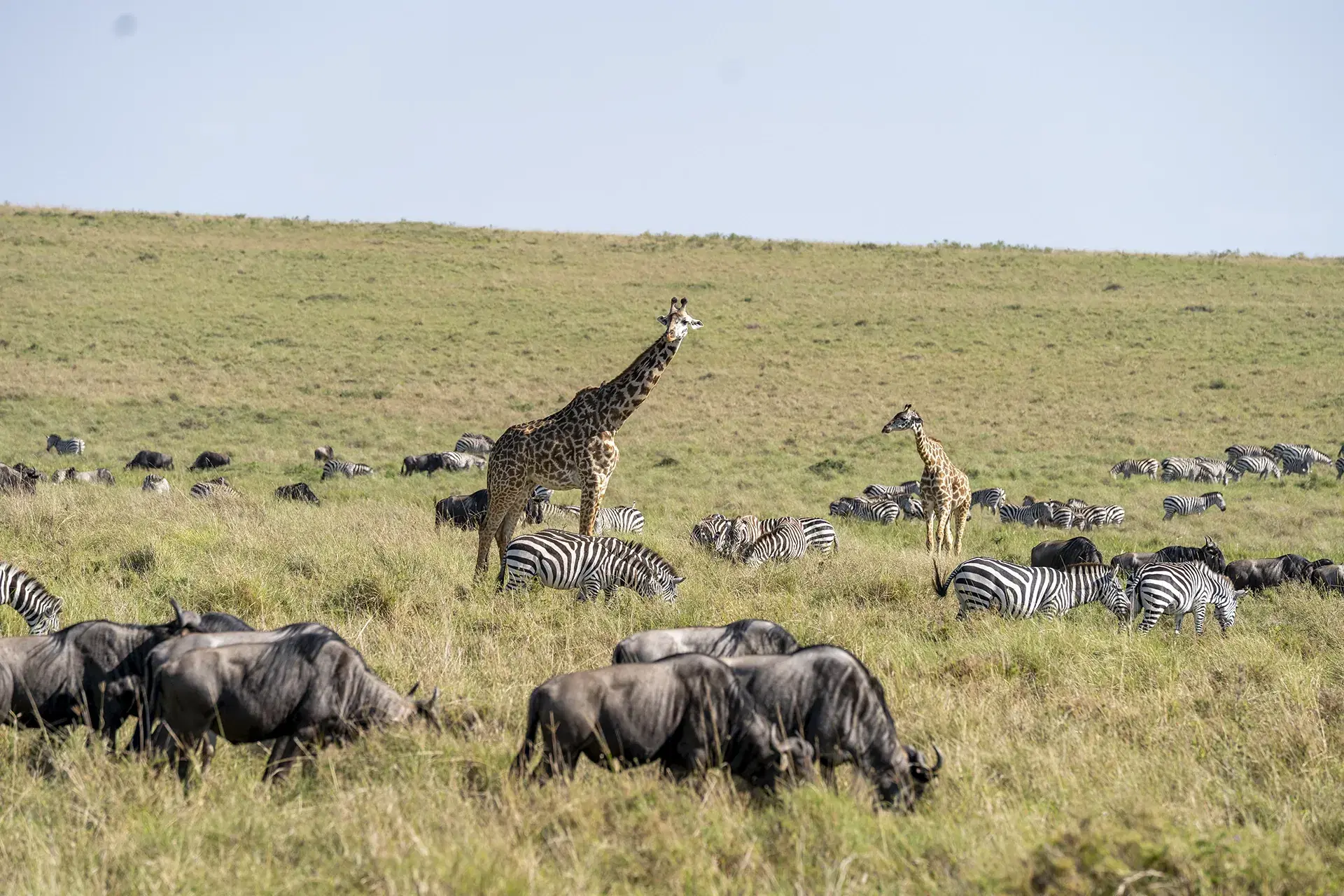
Because the list was drawn up by hunters and measures danger, not size. The Cape buffalo charges and pursues; the giraffe runs. By that criterion the buffalo made the list and the giraffe, taller than any of the five, did not.

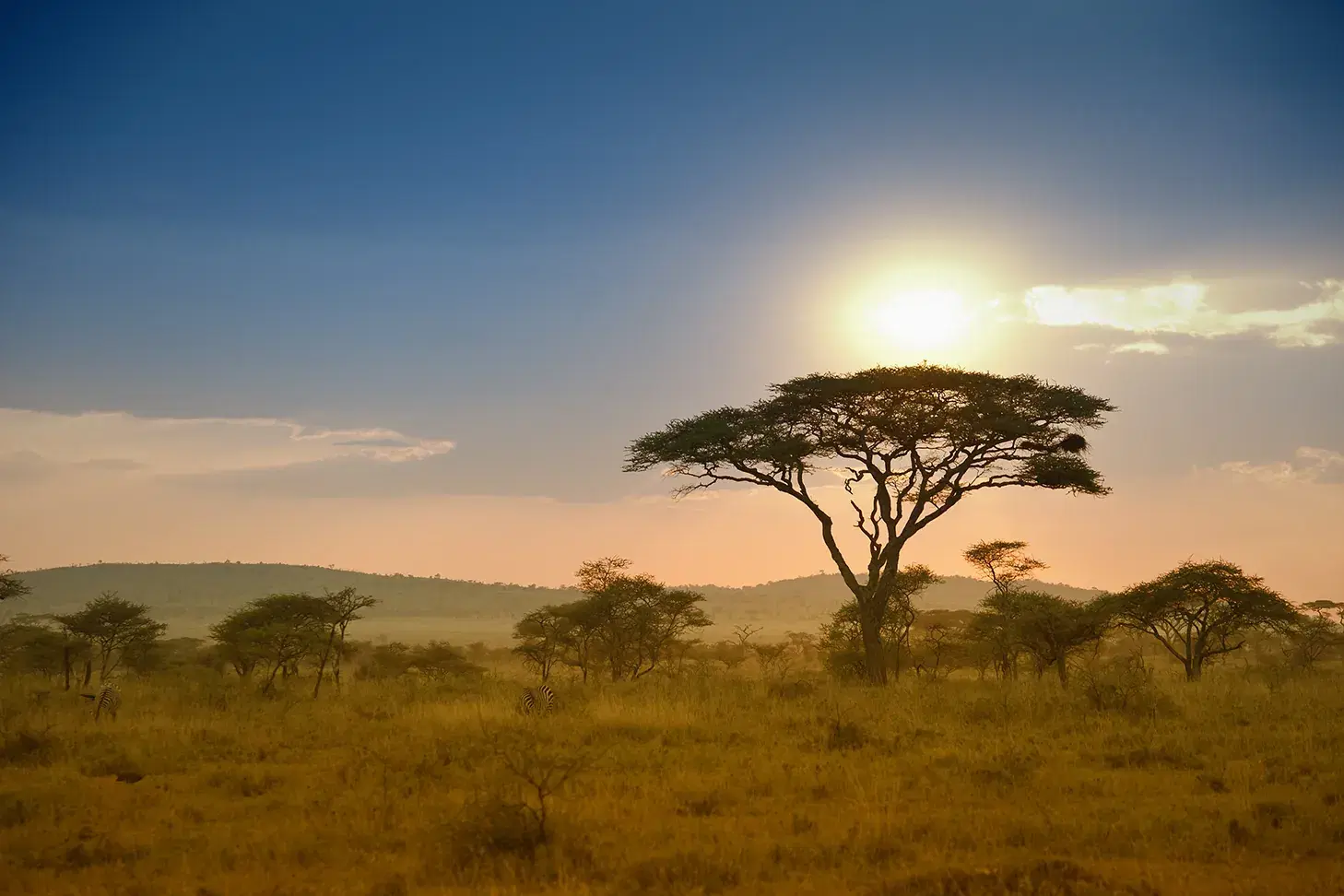
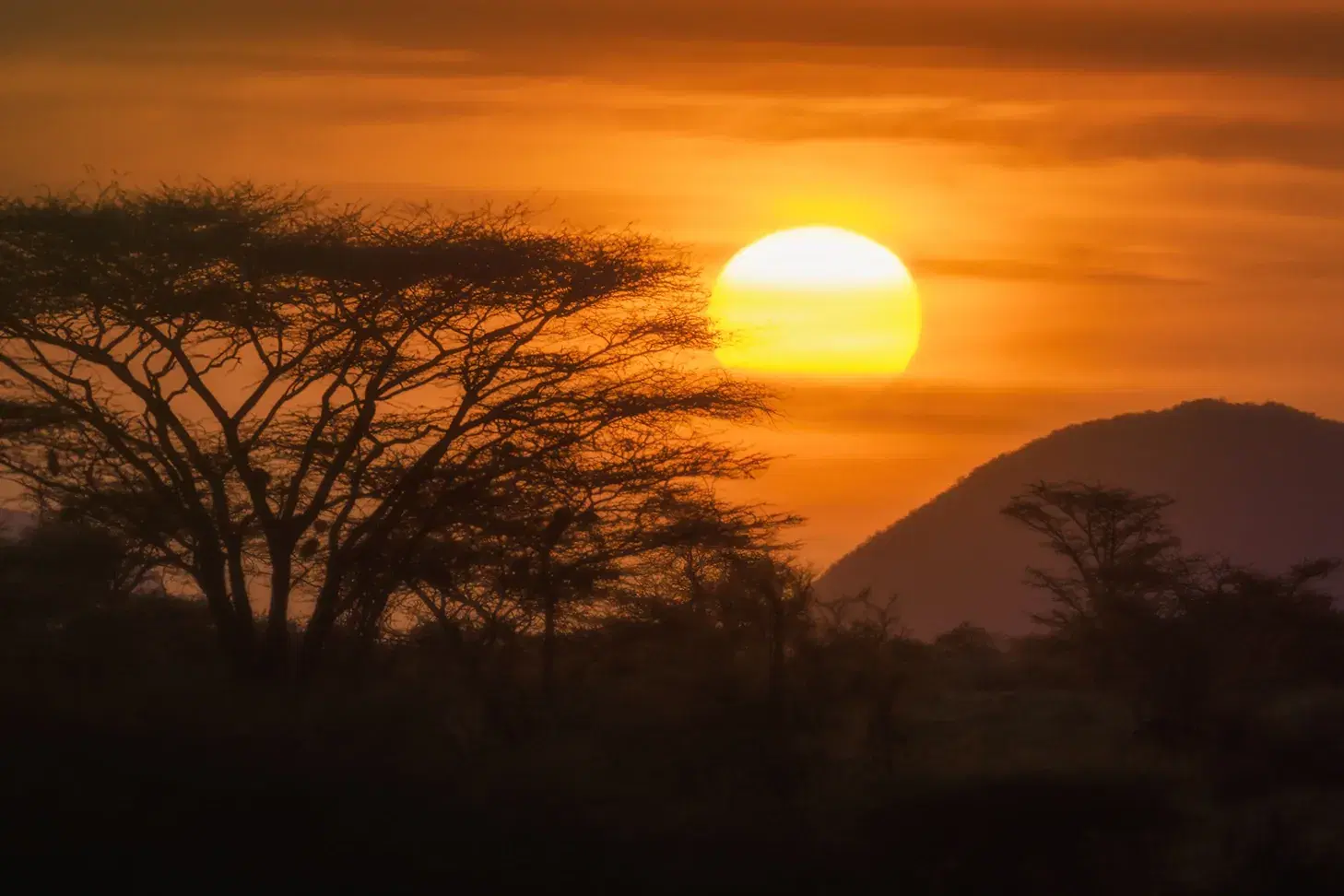
Sunset over the African savannah with an acacia silhouetted against the sun and zebra behind

We design trips that adapt to your pace, your interests and the way you want to be there.