Skip to content
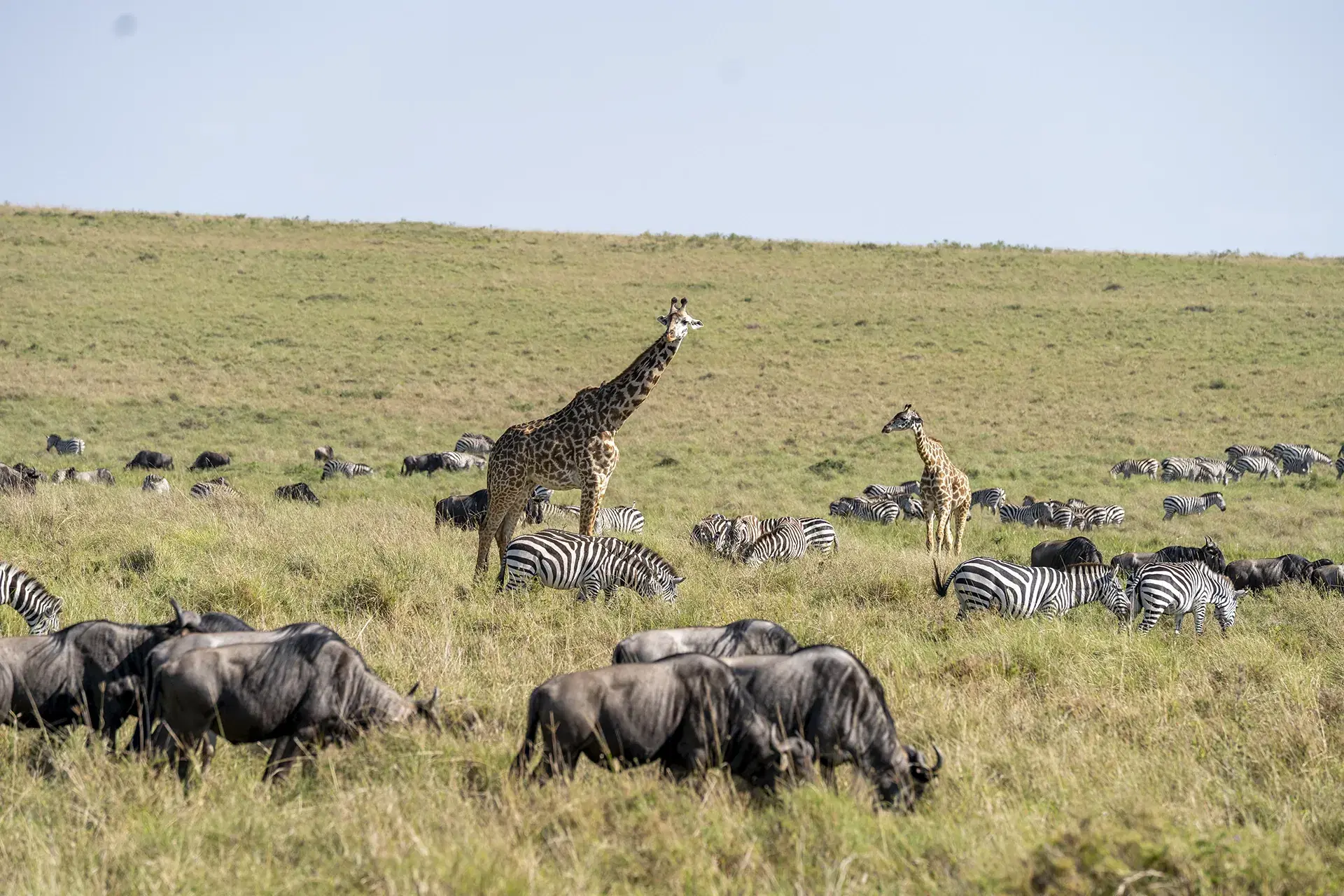
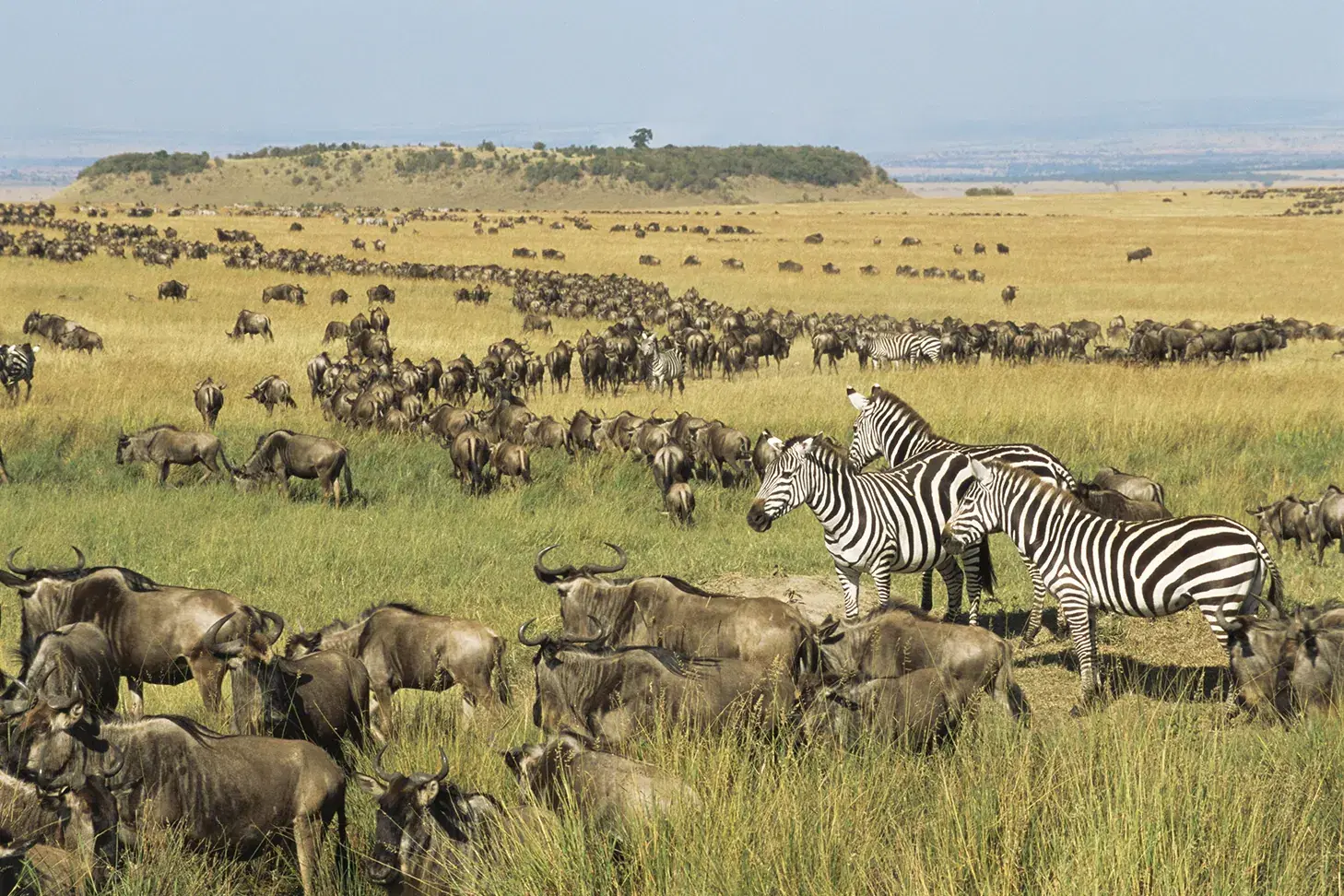
Thousands of wildebeest and zebra moving across the plain during the great migration in the Masai Mara

Guide

What the great wildebeest migration is, where the herds are month by month between the Serengeti and the Masai Mara, and when the Mara River crossings happen.

The great migration is the continuous movement of around a million and a half wildebeest, joined by some two hundred thousand zebra, on an annual circuit between the Tanzanian Serengeti and the Kenyan Masai Mara. It has no fixed date: it follows the rain and the grass. The Mara River crossings, its best-known moment, happen on the Kenyan side between July and October.

The popular image of the migration is a line of wildebeest crossing from one country into another, once a year, on a set date. None of those three things is accurate.

What actually happens is permanent movement. The herds rotate on a closed circuit inside the Mara–Serengeti ecosystem, following the new grass that grows wherever it has just rained. They are always migrating: the right question is not when they migrate, but where they are this month.

The Serengeti and the Masai Mara are also the same ecosystem split by a political border. The Serengeti covers close to fifteen thousand square kilometres; the Masai Mara around fifteen hundred. The animals have no idea which is which, and that is why the northern Serengeti and the Mara work as a single unit for much of the year.

These dates are an average of behaviour, not a timetable. A year of early rains shifts the whole calendar, and that happens more often than the brochures suggest.

Where the migration is through the year
MonthsWhereWhat happens
January – MarchSouthern Serengeti and NdutuCalving season. Hundreds of thousands of calves are born within a few weeks and predator activity reaches its annual peak.
April – MayCentral SerengetiLong rains. The herds move north and west in long columns.
June – JulyWestern corridor and northern SerengetiThe first river crossings, on the Grumeti.
July – OctoberMasai Mara, KenyaArrival in the Mara and the Mara River crossings. This is the high season of the Kenyan safari.
November – DecemberBack to the southern SerengetiThe short rains call the herds back towards the southern plains.

It is the scene everyone has in their head: thousands of wildebeest throwing themselves down a bank into a river full of Nile crocodiles. It happens, it is real and it is among the most extraordinary things you can see on the continent.

The rest needs saying too. A crossing keeps no schedule. The herds can gather on the bank for hours, turn around and come back the next day. You can wait an entire morning and see nothing, and you can arrive at a crossing point ten minutes before it starts. This is wildlife, not a show with scheduled performances.

From that comes the only serious piece of advice on the subject: if the aim is to see a crossing, give yourself several days in the Mara rather than one. An itinerary that spends a single night in the Mara in September is not buying a crossing, it is buying a raffle ticket.

The Masai Mara is open plain with very little tall vegetation. That geography is the reason encounters are so frequent and so visible: predators hunt in the open and a sighting does not depend on the luck of a gap between the trees.

Add the arrival of a million and a half herbivores to that openness and the result is the largest concentration of predators on the continent within a comparatively small space. Lions, cheetahs, leopards and hyenas that live there all year round find themselves, for a few months, with unlimited food.

Our Classic Masai Mara programme sets aside two full game-viewing days inside the reserve, on top of the arrival day. That is the logic: give the Mara time instead of passing through it.

And when someone writes to us asking for “the migration”, the first thing we check is their dates. If they fall in January, the conversation stops being about the Masai Mara and becomes one about the southern Serengeti, which is where the spectacle will be that month. It is more honest, and the trip turns out better.

The specific doubts we get most often on this subject, answered plainly.

How many wildebeest make up the great migration?

Around a million and a half wildebeest, joined by some two hundred thousand zebra and large numbers of gazelle. The zebra tend to go first: they eat the taller, coarser part of the grass and leave behind the tender regrowth that the wildebeest feed on.

Is the migration better in Kenya or in Tanzania?

It depends on the month, not the country. Between July and October the spectacle is in the Kenyan Masai Mara, with the Mara River crossings. Between January and March it is in the southern Serengeti in Tanzania, with the calving season. Either one is “the migration”; they are different chapters of the same circuit.

How many days do you need to see a river crossing?

Three nights in the Mara is the reasonable minimum if the crossing is the priority. Crossings keep no schedule and carry no guarantee, and the only way to improve the odds is to increase the number of mornings you have inside the reserve.

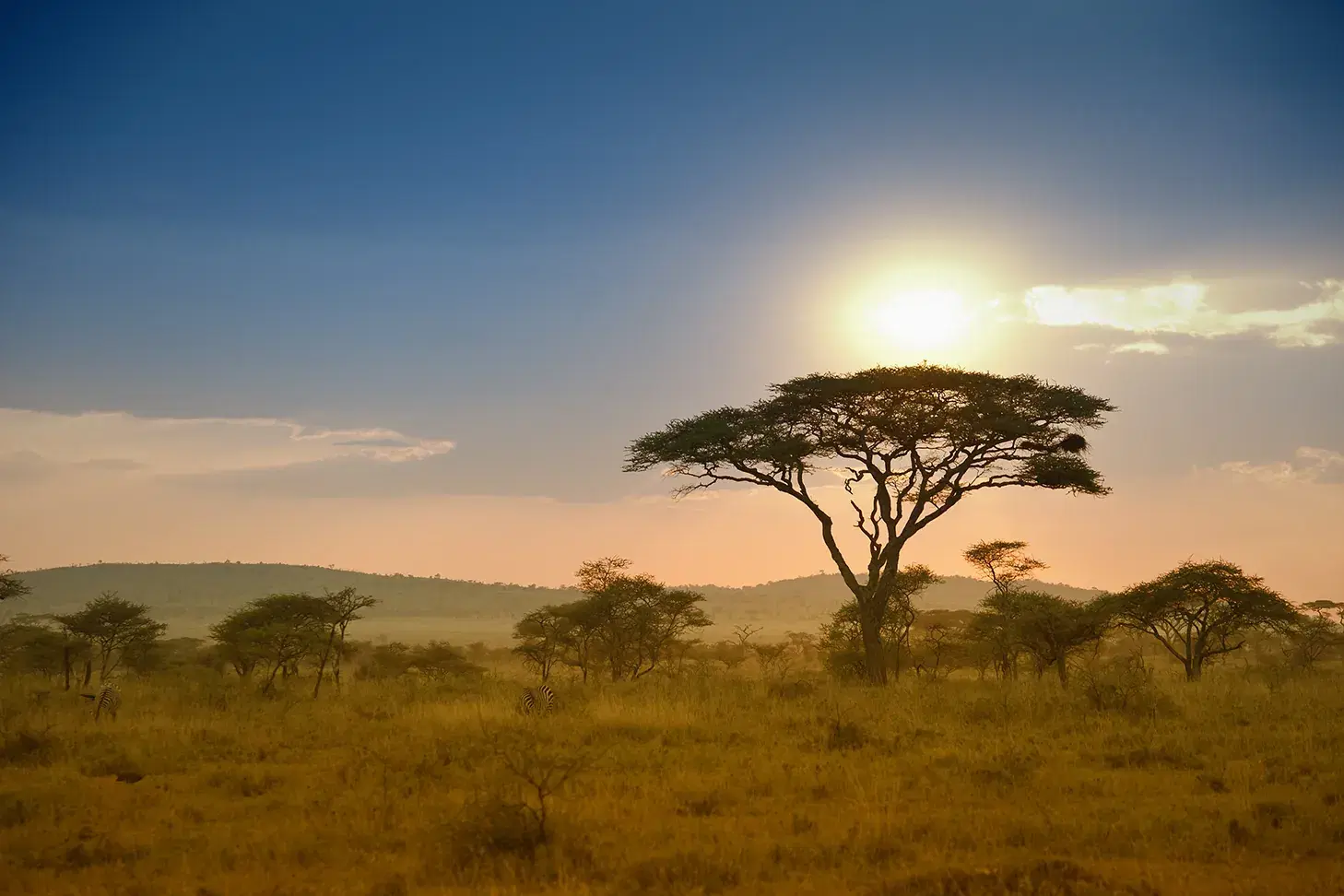
Sunset over the African savannah with an acacia silhouetted against the sun and zebra behind

We design trips that adapt to your pace, your interests and the way you want to be there.