Skip to content
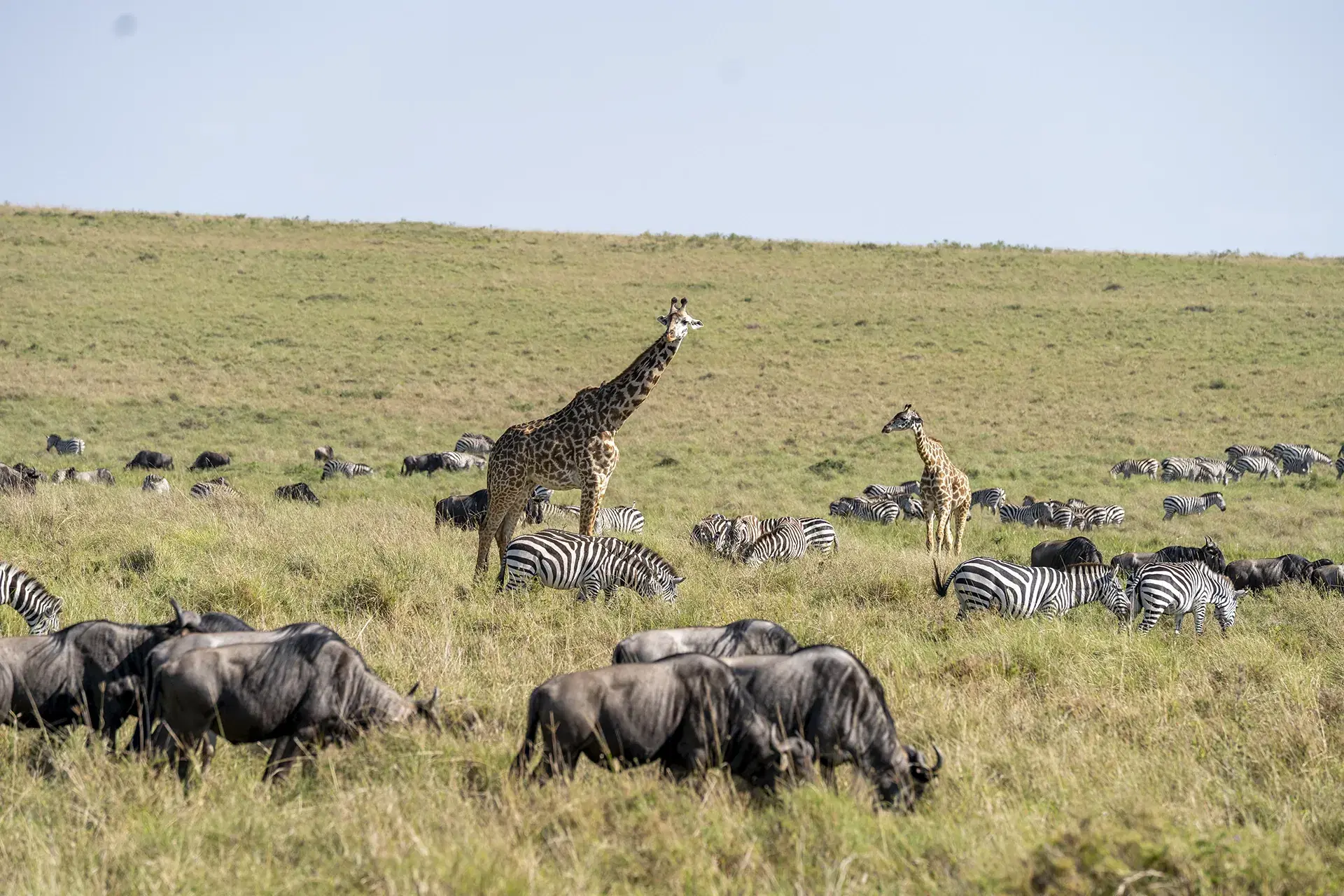
Giraffes, zebra and wildebeest grazing together on an open rise in the Masai Mara

Guide

Clothing, colours that work and colours that do not, binoculars, camera gear, first-aid kit and adaptors: the real packing list for Kenya, Tanzania or Uganda.

Earth-toned clothing worn in layers, your own binoculars, sun protection, insect repellent, a British type G plug adaptor and a soft bag if the itinerary includes light aircraft. Avoid blue and black, which attract the tsetse fly, and camouflage, which in several African countries is restricted to military use.

Khaki, olive and beige are not an aesthetic code inherited from the movies: they are the colours that contrast least with the landscape and hold the least heat under the midday sun.

Two colours are worth leaving at home for concrete reasons. Blue and black attract the tsetse fly, which is precisely the insect you do not want a relationship with out in the field. And camouflage: in several African countries its use is reserved for the armed forces, and civilians may not wear it, tourists included.

White, for its part, works until the first dirt road. After that it stops being white.

The most repeated packing mistake is assuming that the equator means heat all day. Morning game drives leave before dawn, in an open vehicle, at fifteen hundred metres or higher: it is genuinely cold. Four hours later the sun is beating down.

Base layer

Lightweight, quick-drying long-sleeved shirts. They protect you from the sun at midday and from the mosquitoes at dusk, which is when they bite.

Warm layer

A fleece or light jacket for the dawn departures, and a windproof. In a moving vehicle the wind chill takes several degrees off.

Trousers

Long and comfortable. The zip-off kind are practical, even if nobody defends them on style.

Footwear

Trainers or closed boots, already broken in. A safari is spent mostly sitting down, but there are guided walks and this is not the trip for brand-new shoes.

Hat and scarf

A brimmed hat for the sun and a scarf or buff for the dust, which in the dry season never lets up.

If you have to pick a single thing to bring, it is your own binoculars. This is not an enthusiast's accessory: it is the difference between seeing a distant smudge and seeing a leopard.

An 8x42 or 10x42 is the sensible standard — the first number is the magnification, the second the diameter of the objective lens in millimetres, which determines how much light gets in at dawn and dusk. Vehicles usually carry a pair on board to share, but sharing binoculars at the exact moment the animal appears does not work.

For the camera, a telephoto from 200 millimetres is the useful minimum and 400 is where it gets interesting. And one piece of advice learned the hard way: do not change lenses inside the vehicle. Savannah dust gets into everything, and the sensor does not forgive.

Type G adaptor

Kenya, Tanzania and Uganda use the British three-flat-pin plug at 240 volts. The Chilean plug does not fit. It is the most common omission of all.

Power bank

Many camps run on a generator for limited hours and mains power is not available all night. A charged power bank solves the problem for both camera and phone.

Head torch

When the generator goes off, a camp inside a reserve goes genuinely dark. A head torch rather than a hand-held one, so you keep both hands free.

Personal first-aid kit

Your own medication in its original packaging, plus the basics: painkiller, anti-diarrhoeal, antihistamine and plasters. Replacing them in the field is not always possible.

Repellent and sunscreen

DEET-based repellent for dusk and a high-factor sunscreen. Equatorial sun at altitude is stronger than it looks.

Resealable bags

To keep the dust off camera, documents and chargers. With one important caveat: single-use plastic bags have been banned by law in Kenya since 2017, with serious fines. Reusable bags, not supermarket ones.

Digital copies of your documents

Passport, insurance and tickets saved offline on your phone. Inside the parks the connection is patchy and downloading something may not be an option.

Drones: flying them is prohibited in the region's national parks without a specific authorisation that takes a long time to arrange and is rarely granted to individual travellers. Bringing one without a permit can end in confiscation at the airport.

A large hard-shell case, if the itinerary includes internal flights on light aircraft. It does not fit in the hold, and that is not negotiable at the desk.

Heavy going-out clothes for “the evenings”. Safari lodges and camps have no formal dress code. Nobody is going to look at your shoes.

The specific doubts we get most often on this subject, answered plainly.

Which clothing colours should you avoid on safari?

Blue and black, because they attract the tsetse fly, and camouflage, whose use is reserved for the armed forces in several African countries. White is legal but impractical: it stays clean until the first dirt road. Earth tones are what work: khaki, olive and beige.

Do you need your own binoculars?

Yes. It is the single item that most changes the experience of a safari. An 8x42 or 10x42 is the sensible standard. Vehicles usually carry a pair to share, but the best moments last seconds and sharing does not cut it.

How much luggage can you take on safari?

On road transfers there is no limit beyond the space in the vehicle. If the itinerary includes internal flights on light aircraft, the usual limit drops to around fifteen kilos per person in a soft bag, with no hard case. We tell you in advance when that applies.

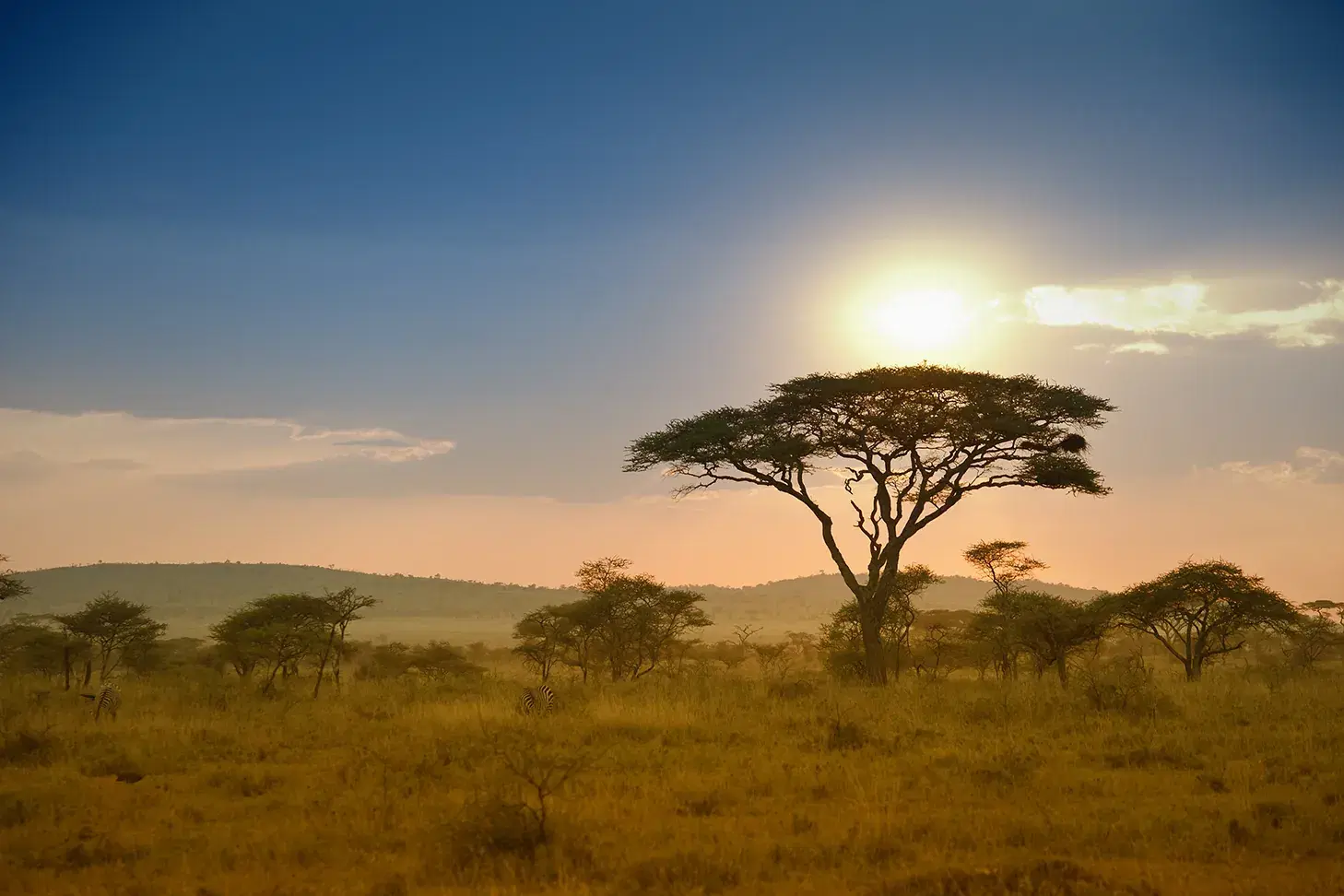
Sunset over the African savannah with an acacia silhouetted against the sun and zebra behind

We design trips that adapt to your pace, your interests and the way you want to be there.